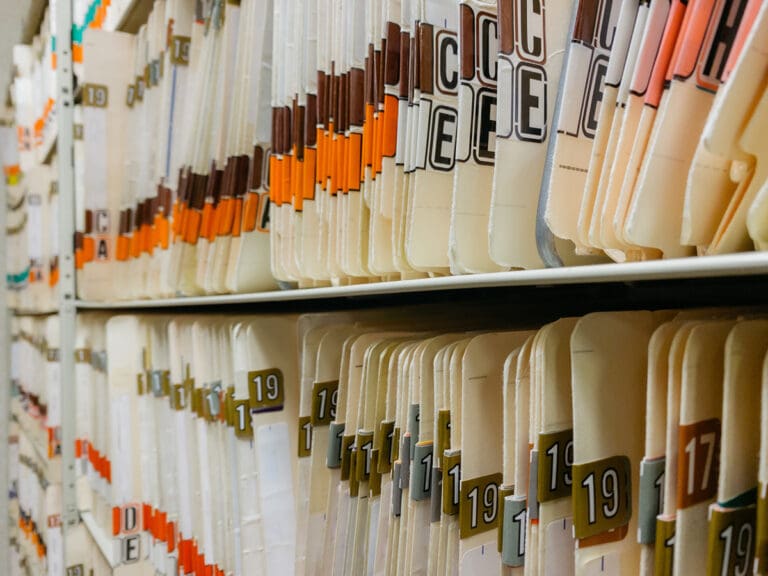
Every business creates and relies on records. From client files to financial documents, the volume of information grows quickly. Over time, it becomes harder to keep everything organized and easy to access.
Many organizations don’t realize how much weak record-keeping affects their day-to-day operations. It’s often treated as a back-office task instead of a core business function. But when records are not managed properly, it can create delays, confusion, and unnecessary risk.
A clear, structured approach to managing records helps you stay organized, protect sensitive information, and keep your business running smoothly.
Causes and Consequences of Poor Records Management
Poor records management is the failure to properly organize, store, retrieve, and dispose of business documents. This can show up in simple but costly ways.
You may see inconsistent filing systems across departments, documents that are hard to locate, or retention policies that are unclear or not followed. Some records may be stored without proper security controls, leaving sensitive information exposed.
These issues affect both paper files and digital records. Without a clear system, information becomes harder to manage as your business grows.
There are several common reasons this happens. Many businesses lack clear policies or standard processes. Employees may develop their own habits, leading to inconsistency. Training is often limited, so staff are unsure how records should be handled.
In some cases, companies rely too heavily on paper-based processes. Others simply outgrow their existing systems as the volume of information increases.
Over time, these gaps make it harder to stay organized and in control of your information. These are the early warning signs that often lead to the larger consequences of poor records management if they are not addressed.
6 Major Risks of Poor Records Management
Risk 1 – Lost or Misplaced Documents
When records are not stored in a consistent way, employees spend time searching for what they need. In some cases, documents cannot be found at all.
Missing files can create serious problems during audits, legal requests, or internal reviews.
Solution:
Use structured storage and clear indexing so records are easy to locate. Moving inactive files to secure offsite storage also helps keep everything organized.
Risk 2 – Compliance and Regulatory Violations
Many industries require records to be kept for specific periods of time. Without clear guidelines, it’s easy to keep documents too long or dispose of them too soon.
This can lead to failed audits, fines, or legal exposure.
Solution:
Set clear retention schedules and follow a defined records lifecycle so documents are handled properly from creation to destruction.
Risk 3 – Security and Privacy Risks
Sensitive information needs to be protected. When records are not stored securely, unauthorized access becomes a real concern.
This increases the risk of data exposure and can damage trust with clients and employees.
Solution:
Store important documents in secure facilities with controlled access. When records are no longer needed, use secure shredding to dispose of them properly.
Risk 4 – Operational Inefficiencies
Disorganized records slow down your team. Employees spend time searching for documents instead of focusing on their work. Duplicate files can also build up over time.
These issues make everyday processes less efficient.
Solution:
Use consistent indexing and consider digital systems that make it easier to search and retrieve documents.
Risk 5 – Rising Storage Costs
Paper records take up space. Filing cabinets and storage rooms can quickly fill up, occupying valuable office space that could be used for other purposes.
Solution:
Move inactive records to an offsite storage facility designed for document management. This helps free up space while keeping records accessible.
Risk 6 – Limited Access to Critical Information
Paper files are often tied to one location. This makes it harder for teams to access information, especially when working remotely or across multiple offices.
Solution:
Digitize your records so they can be accessed when needed. Services like scan-on-demand make it easy to retrieve files without handling physical documents.
How Better Records Management Reduces Risk
A well-organized system makes a big difference. When records are managed properly, documents are easier to find, and sensitive information is better protected.
You can respond to requests faster, stay prepared for audits, and avoid unnecessary delays. Clear processes also help your team work more efficiently and reduce confusion.
In addition, having a plan in place improves your ability to recover information in the event of a disruption or disaster.
How Armstrong Archives Helps Organizations Improve Records Management
At Armstrong Archives, we work with businesses across Dallas–Fort Worth to simplify how they manage their records.
Our secure offsite records storage keeps your documents safe while freeing up valuable office space.
We also offer climate-controlled environments to help protect sensitive materials.
If you’re ready to reduce paper and improve access, our document scanning services can help you digitize paper records quickly and easily.
Need a specific file quickly? Our scan-on-demand service allows you to request documents you have in storage and receive an electronic copy whenever you need them.
We also provide secure document shredding and records destruction services to ensure your records are disposed of properly when they reach the end of their lifecycle.
With over 30 years of local experience, we focus on personal service, security, and reliability. We help you stay organized, protect your information, and keep your business running smoothly.
FAQ on the Risks of Poor Records Management
What are the risks of poor records management for businesses?
Poor records management can lead to lost documents, compliance issues, security concerns, and slower operations. These problems can affect daily work and long-term business performance.
What are the most common causes of poor record-keeping?
Common causes include unclear policies, inconsistent practices, limited training, and relying on outdated or manual systems.
What are the effects of poor record-keeping on compliance and operations?
It can lead to missed deadlines, failed audits, and delays in accessing important information, which impacts both compliance and efficiency.
How can poor records management impact data security?
Without secure storage and controls, sensitive information may be accessed by unauthorized individuals, increasing the risk of data breaches.
How can organizations improve poor records management practices?
Start by creating clear policies, standardizing processes, and using secure storage and digital tools to manage records more effectively.
How does offsite document storage help prevent poor record-keeping?
It provides a structured and secure environment for storing records, making them easier to manage and retrieve when needed.
Can document scanning reduce records management risks?
Yes. Document scanning allows for faster access, better organization, and reduced reliance on physical files.
Why is a records retention policy important for organizations
A retention policy ensures records are kept for the right amount of time and disposed of properly, helping you stay compliant and organized.
Take Control of Your Records Before They Become a Risk
Managing records doesn’t have to be complicated. With the right systems in place, you can stay organized, protect your information, and avoid unnecessary problems.If you’re ready to improve how your business handles records, contact Armstrong Archives today to get started.