Professional Document Scanning Services in Dallas–Fort Worth
Get a Quote
"*" indicates required fields

24/7 monitored facility
Climate-controlled
Scan-on-demand
DFW pickup & delivery
AT A GLANCE
Document scanning services help Dallas–Fort Worth businesses convert paper records into secure, searchable digital files, improving access, efficiency, and long-term records management. Armstrong Archives provides professional document scanning and document digitization services designed to reduce reliance on physical storage while making critical information instantly accessible from anywhere.
Our document scanning solutions streamline the capture, indexing, and storage of business records, allowing files to be quickly retrieved, shared, and managed in a secure digital environment. We handle everything from single-box record scanning to bulk conversion of entire archives. With flexible scanning options, secure data handling, and fast access to digitized records, businesses can improve productivity, strengthen data security, and simplify document management processes.
Document Scanning & Storage in Dallas – Fort Worth
Filing cabinets full of paper documents slow your team down and create real compliance risk: misplaced records, unauthorized access, and no recovery path if there’s a fire or flood. Armstrong Archives converts your paper files into organized, searchable digital records, so your team can find what they need in seconds, from any device, without investing in new infrastructure.
We offer two scanning solutions – a scan-on-demand option for stored records, and a full service bureau conversion for bulk document scanning, with Optical Character Recognition (OCR), custom indexing, multiple output formats, and a web-based cloud storage system. Whether you have a single box of archives or a warehouse of legacy files, we have a right-sized solution for your Dallas–Fort Worth business.
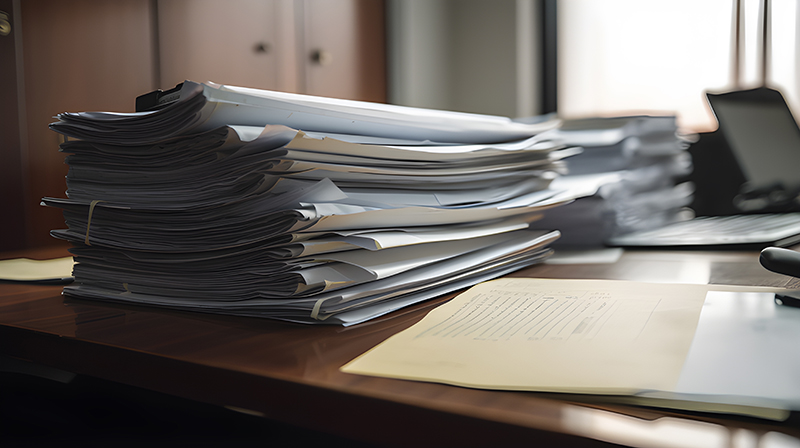
Rather than digging through mounds of paper files when you need information, our document imaging services allow you to easily access your most critical business data at any time, from anywhere. Unlike national document imaging companies, we are a locally owned DFW operation, so your files never leave North Texas. Whether you’re right here in Dallas-Fort Worth or on the other side of the globe, you’ll be able to radically improve response times and reap the efficiencies that go with digital files – without having to invest in a costly new infrastructure.
Our Scanning Solutions
Not every business has the same scanning needs. Some want their entire archive converted at once; others need records kept on hand but only accessed occasionally. Here is how our bulk and on-demand solutions work.
Service Bureau – Bulk Document Scanning and Full Conversion of Your Document Archive
Our service bureau solution is designed for organizations ready to go fully digital. We pick up your documents from your Dallas or Fort Worth office, prepare them for scanning (removing staples, bindings, and clips), scan and index every document, and store the digital results in our highly secure data center. Completed files are delivered in your preferred format or uploaded directly to your own cloud storage account. We also offer a cloud storage solution for storing and viewing your scanning projects. This option comes with a built-in viewer and works with any type of file, not just PDFs.
Best for: Businesses transitioning to a fully paperless workflow, enterprise and commercial document scanning projects, or those that need frequent access to a large volume of digitized records.
Scan-on-Demand – Digital Access to Your Stored Records
If you store paper records with Armstrong Archives, our scan-on-demand solution gives you digital access to individual files without converting your entire archive upfront. When you need a document, simply call or submit a request online – we locate it, scan it, and send it to you. Files can be delivered by email (non-HIPAA documents), uploaded to your SFTP server, or shared over Dropbox.
Best for: Organizations that must retain records for compliance or legal reasons but rarely need to access them – getting the benefits of digital retrieval at a fraction of the cost of bulk conversion.
Bulk and High-Volume Document Scanning Projects
Armstrong Archives handles bulk document scanning projects of any size, from a few hundred boxes to complete multi-decade archives. Our Carrollton facility runs high-volume document scanning, so a large conversion does not sit behind smaller jobs in the queue.
There is no minimum volume. If you have twenty boxes, we will scan twenty boxes, and if you have twenty thousand, we will scope the project in phases so your team keeps access to the records still waiting in the queue. Bulk scanning services are quoted per image based on paper quality, size, volume, and indexing requirements.
Completion time for commercial document scanning projects in the DFW area varies greatly. Small jobs can be completed within a few weeks of pickup, while larger, more complex jobs can take substantially longer. We will give you a firm timeline before the first box leaves your office, not after.
How Our Dallas Document Scanning Service Works
We handle every stage of the process, from initial pick-up to final delivery.
Step 1 – We collect your documents
Too busy to box and label files yourself? Our team can come to your DFW office for on-site pickup, pack your records, and handle all the paperwork. We mark each box with the information you specify and barcode everything before it leaves your premises.
Step 2 – Document preparation
At our Carrollton facility, every document is prepared for scanning: staples, paper clips, bindings, and folds are removed. This preparation step is what separates professional scanning from simply feeding paper through a machine.
Step 3 – Scanning, OCR, and indexing
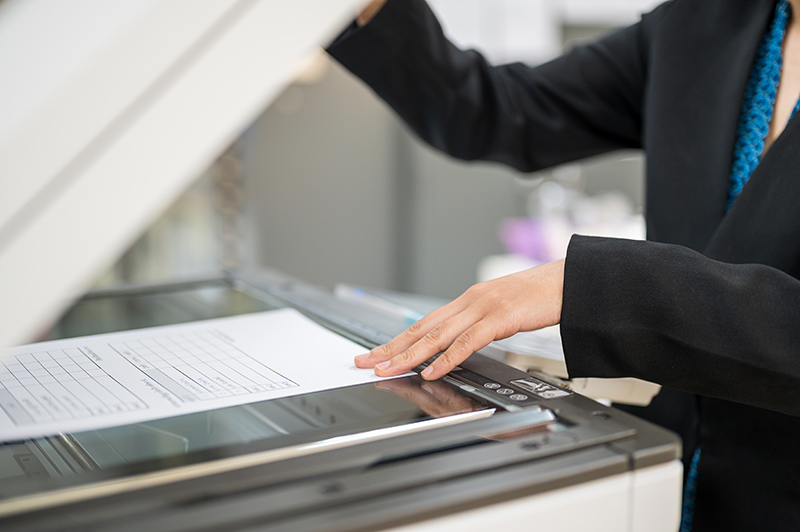
Documents are scanned at high resolution and converted into digital image files. Where requested, Optical Character Recognition (OCR) is applied – this converts the scanned image into fully searchable text, so you can find any word in any document instantly without knowing the file name or folder location. Files are then indexed according to your specifications: by client name, document type, date, department, or any other criteria that matches how your team searches.
Step 4 – Quality review
Every scanned image is reviewed for readability and clarity. Any page that has not scanned cleanly is re-scanned before your project is considered complete. You receive only finished, usable files.
Step 5 – Delivery in your preferred format
Completed digital files are delivered in the format you specify – PDF (with or without OCR), TIFF, or other formats on request. Delivery options include upload to your cloud storage account, flash drive, or secure web access through our cloud system.
Step 6 – What happens to your original documents
Once scanning is complete, we work to your instruction regarding the physical originals. Options include: returning the documents to you, retaining them in secure offsite storage at our Carrollton facility, or scheduling confidential shredding with full destruction documentation. We will never make that decision without your explicit direction.
Why Switch to Document Scanning?
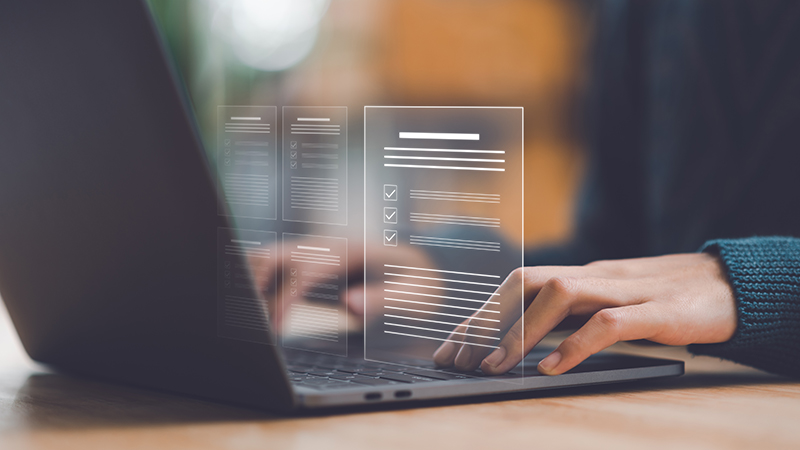
Converting paper files to digital format changes more than just where documents live – it changes how quickly your team can act on the information inside them. Here is what our Dallas clients gain most often.
Instant retrieval. Instead of sending someone to the file room, your team can search by keyword, name, date, or any index field and pull the right document in seconds – from their desk or remotely.
Disaster recovery. Paper records lost to fire, flood, or physical damage are gone permanently. Scanned files stored in our data center are mirrored for redundancy, meaning a single incident cannot wipe out your records.
Compliance and security. Digital files can be encrypted, access-controlled, and audited. Our secure document scanning services keep every file inside a chain of custody from pickup to delivery. For businesses subject to HIPAA, Sarbanes-Oxley, or other regulations, scanned records are far easier to manage, track, and demonstrate compliance for than physical files.
Space reclaimed. Each standard filing cabinet requires roughly 15 square feet of accessible floor space. Scanning and removing even a modest archive frees up room for productive use.
Not sure whether bulk conversion or scan-on-demand makes more sense for your situation? Armstrong Archives offers consulting to help you make the right call before you commit to a project. There are situations where scanning delivers clear ROI and situations where a storage-first approach costs less – we will tell you honestly which applies to yours.
Legal Document Scanning
Law firms across Dallas–Fort Worth use Armstrong Archives for legal document scanning that holds up under discovery. Case files, contracts, deposition transcripts, and court records are scanned, OCR’d, and indexed by matter number, client name, or filing date, so a paralegal can pull any document in seconds rather than walking the file room.
Every legal scanning project runs under a documented chain of custody from pickup to delivery. Originals can be returned, retained in secure offsite storage at our Carrollton facility, or destroyed with a certificate of destruction once your retention obligation expires.
Document Types We Scan
Armstrong Archives scans a wide range of document types and media formats at our Carrollton, TX facility, including:
- Standard business documents – letter and legal size, single or double-sided
- Large format documents – maps, plans, engineering drawings, and blueprint scanning
- Legal documents – case files, contracts, and court records
- Medical records – patient charts, insurance forms, patient charts with all correspondence and photos.
- Financial records – invoices, receipts, statements, and audit documentation
If you have a document type not listed here, contact us – we handle many custom projects and will tell you plainly whether it’s something we can do.

Professional Medical Document Scanning
Healthcare providers – from private practices and clinics to hospitals and imaging centers – have some of the most demanding document scanning requirements of any industry. Patient records must be digitized with HIPAA-compliant handling, indexed in a way that supports fast chart retrieval, and either stored securely or integrated into your existing records workflow.
Armstrong Archives provides HIPAA-compliant document scanning for medical offices across Dallas–Fort Worth. Scanned patient files are indexed for quick retrieval, and physical originals can be securely stored at our Carrollton facility or destroyed with a certified destruction certificate. For practices transitioning to electronic health records, our scanning service can convert paper charts into digital files ready for your records system.
Online Access and Custom Document Scanning Projects
Armstrong Archives provides professional document scanning services across the DFW Metroplex and surrounding areas. Even if you’re outside the Dallas–Fort Worth region and searching for bulk scanning services, we’ve got you covered. We offer flexible solutions to support your document scanning and storage needs—no matter your location. Contact us today to learn more about our secure scanning and physical archiving services in North Texas.
Digitizing your documents can streamline operations and deliver long-term cost savings. Our document digitization services cover the full process: we digitize paper documents, apply OCR, index them to your naming convention, and hand back files your systems can actually use. Whether your business is large or small, we can scan and upload your records to our secure repository or any preferred storage format.
Scan On-Demand
Occasionally the need arises where you need a document ASAP and it just happens to be in one of the boxes in our queue to be scanned. We’ll find the document, move it to next in line, scan it, and send it to you at no added cost.
PDF with OCR – Making Your Documents Fully Searchable
All scanned documents can be processed with Optical Character Recognition (OCR), which converts the scanned image into fully searchable text within the PDF. Rather than opening files one by one, your team can search across your entire document archive by keyword – finding the right record in seconds. If you have an existing library of PDF files that have not yet been OCR’d, we can process those too.
Online Access
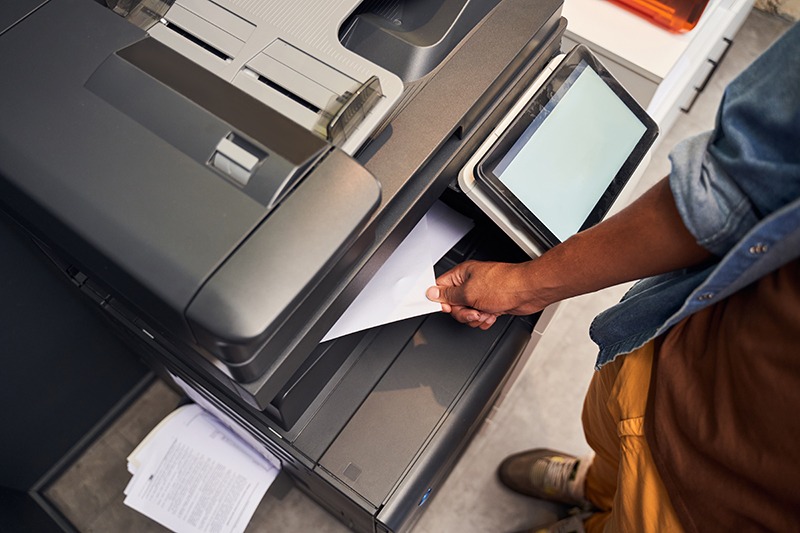
Access your scanned documents online by having us upload them to your cloud storage account. Our online system lets you see a full inventory of each box you have stored with us and which documents have been scanned.
Custom Scanning Projects
Every scanning project is different. If your needs do not fit neatly into a standard service description – unusual document sizes, mixed media types, a specific indexing structure, or integration with a particular document management system – tell us what you need. We offer consulting to help you design the right approach before the project starts, and we will not consider the job done until the output matches your requirements.
Quality Customer Service
Often customers will require information with little notice; our document scanning services allow you to retrieve any file in a matter of seconds! Suddenly your customers no longer have to wait impatiently for adequate service, as document scanning reduces response time exponentially. Document scanning provides businesses instant access to the data they require for increased productivity and customer service. It’s truly a win-win situation for both your company and your customers.
Increased Productivity
Turning to document scanning frees up time for your employees so they can attend to productive business duties, rather than spending countless hours searching for documents. When documents are scanned, these electronic files can be obtained immediately and if required, shared or distributed both internally and externally. Document scanning offers a convenient solution for viewing, printing, and organizing.
Security & Disaster Recovery
Simply filing old documents away when no longer needed, does not provide your company and customers with the security needed. Filing paper in-house often leads to disorganization which can develop into major issues for businesses. If files are found stored incorrectly, or papers become missing because of an employee who acts negligently, your business could be at risk of a data breach or identity theft case. Papers that should be secure but instead land in the trash are open for public accessibility. Document scanning will supply reliable security and tracking capabilities designed for easy monitoring of information. Most importantly, if a natural disaster occurs, documents previously scanned are protected from the possibility of data loss.
Compliance & Simple Management
Document scanning services assist businesses in remaining HIPAA compliant, as scanned files ensure your customers’ confidential information is backed-up, and safe from becoming lost or stolen. Hard copies are more challenging to manage, while document scanning software provides a digitized means of record keeping, increasing the security of your documents. Paper records are more difficult to manage and therefore are often misplaced, while document management software is an easy solution that is secure.
Document Scanning Services Across the DFW Metroplex
Armstrong Archives has been serving businesses across Dallas–Fort Worth from our Carrollton, TX facility for more than 30 years. Our document scanning services are available throughout Dallas, Fort Worth, Carrollton, Plano, Irving, Arlington, Frisco, McKinney, Lewisville, Denton, and the broader North Texas region.
As a locally owned, Certified Women’s Business Enterprise business, we offer personalized service and locked rates for the life of your contract – no hidden fees, no price increases after you sign.
Armstrong Archives FAQs
What types of documents can Armstrong Archives scan?
We scan standard business documents (letter and legal size), large format materials including blueprints and engineering drawings, legal documents, medical records, financial records, and photographs. We also handle custom projects – contact us to discuss your specific document type or volume.
What is OCR, and do you offer it for scanned documents?
OCR stands for Optical Character Recognition. It converts a scanned .pdf into searchable, editable text – so rather than images of pages, you get a PDF where every word is searchable. Armstrong Archives applies OCR to scanned documents and can also process existing PDF files that have not yet been OCR’d. This is included as an option for both our service bureau and scan-on-demand solutions.
What are the benefits of electronic document scanning?
Scanning converts paper records into organized digital files that your team can access instantly from any device. Key benefits include faster document retrieval, reduced physical storage requirements, protection against loss from fire or flood, improved compliance for regulated industries, and controlled access so only authorized personnel can view sensitive files.
How much does document scanning cost?
Scanning costs vary depending on the volume of documents, the size of documents, and the level of indexing required. Armstrong Archives provides custom quotes with no obligation – and our rates are locked for the life of your contract, so you will not see price increases after you start.
Does scanning help with business continuity?
Yes. Paper records can be permanently lost to fire, flood, or physical damage. Digital files stored in our data center are mirrored for redundancy, meaning a single incident cannot wipe out your records. For businesses with disaster recovery obligations, scanning is one of the most cost-effective safeguards available.
How can scanning improve document security?
Digital files can be encrypted, password-protected, and access-controlled so that only authorised personnel can view sensitive records. Unlike paper, digital files create an audit trail – you can see who accessed what and when.
What happens to my original paper documents after scanning?
Once your project is complete, you choose what happens to the physical originals. We can return them to you, retain them in secure offsite storage at our Carrollton facility, or schedule confidential destruction with a certificate of destruction for your records. Entirely up to the customer and nothing is performed without approval.
What file formats will my scanned documents be in?
The most common output is PDF – with or without OCR applied. We also produce single page TIF and multipage TIF files and other formats on request. For delivery, you can choose cloud upload, flash drive, external hard drive, or stored on our cloud repository. If you have a specific format or integration requirement, let us know before the project starts and we will confirm whether we can accommodate it.
Can large documents be scanned?
Yes. We offer large format document scanning for items that go beyond standard letter-size pages, including maps, plans, engineering drawings, and blueprints (up to 44’). Large document scanning makes it easier to digitize oversized records for storage, retrieval, sharing, and long-term preservation.
How do you ensure data security and confidentiality of my documents?
We protect document security and confidentiality through controlled handling, secure digital storage, and compliance-focused records management practices. Our scanning process also supports traceability for compliance.
Can I receive scanned files securely online?
Yes. We offer several delivery options for scanned files, including upload to your cloud storage, SFTP transfer, and our own cloud system. Depending on the project, scanned files may also be delivered through other approved digital methods to improve speed and reduce reliance on paper files.
How should I prepare my documents for scanning?
Documents should be organized in a way that supports efficient scanning and indexing. Preparation may vary depending on the type of files, the desired output, and how you want documents indexed/named during scanning. For larger or more complex projects, we can help determine the best setup for your scanning workflow and output requirements.
Can scanning be done on-site at my location, or do I need to send the documents?
We pick up important documents from your office as part of our service, then scan and index. This process helps standardize handling, indexing, storage, and delivery across larger scanning projects. We do not offer on-site scanning at outside locations.
Do you offer bulk or high-volume document scanning?
Yes. Armstrong Archives runs bulk document scanning projects of any size, with no minimum box requirement.
What is the difference between document scanning and document digitization?
Document scanning creates a digital image of a paper page. Document digitization is the full conversion process: scanning, then OCR to make the text searchable, then indexing so the file can be found by client, date, matter or any field your team uses.
We provide both. If you need images, we scan. If you need a searchable, indexed archive your systems can query, our document digitization services handle the entire pipeline and deliver files in PDF, TIFF or a format your document management system expects.
Do you offer secure and confidential document scanning?
Yes. Every project runs as a secure document scanning service under a documented chain of custody, from barcoded pickup at your office through scanning at our monitored Carrollton facility to encrypted delivery.